
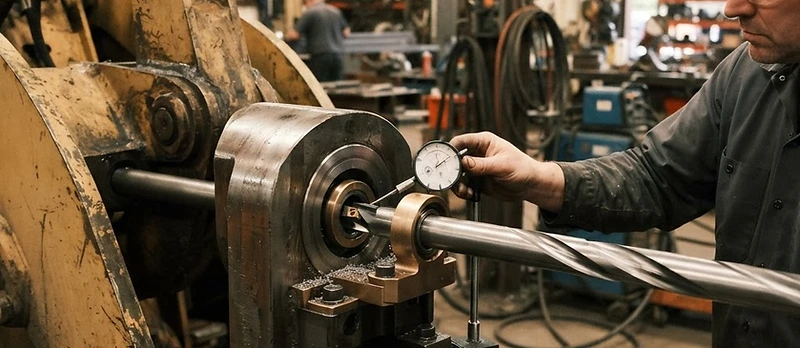
Line boring is a machining process that restores the internal cylindrical surface of a bore to a precise diameter, concentricity and alignment. In mining and heavy equipment, pin and bush bores in linkages, dipper sticks, buckets, hitches and tubs wear over time, becoming ovalised or misaligned. Left unrepaired, this wear accelerates pin and bush failure and can cause more serious structural damage.
NLC Engineering is the largest provider of line boring and machining in the Western Australian Goldfields. With 6 mobile units covering most of WA, we carry out line boring on site wherever practical, avoiding the cost and delay of removing large components for workshop repair.
The typical line boring process involves assessing the worn bore, setting up a portable line boring rig on the component, weld building up worn material where required, machining the bore back to specification, and manufacturing and fitting replacement bushes. The result is a restored bore that returns the component to service at a fraction of the cost of replacement.
Line boring is used across mining, earthmoving, heavy haulage and mobile plant operations, and is one of the most effective ways to reduce equipment downtime and repair before replacement.